
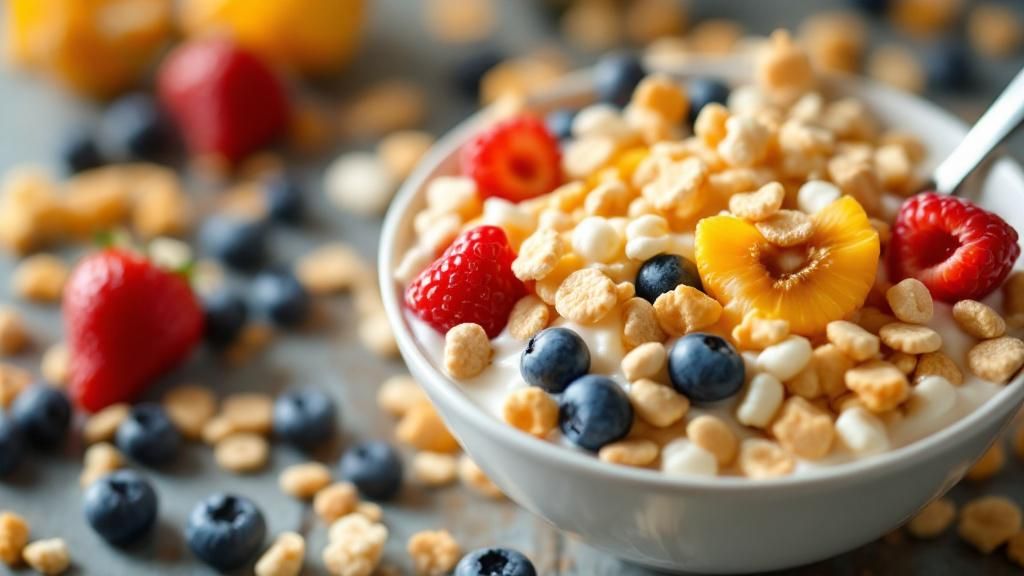
Whilst many Britons regard breakfast cereals and yoghurts as wholesome essentials, prominent dietary experts have sounded the alarm over alarmingly high sugar content lurking beneath ostensibly healthy packaging. A new study reveals that well-known products marketed as healthy options contain sugar levels comparable to sweet treats, often surpassing suggested daily limits in a single serving. This investigation examines which breakfast favourites are culprits, explores the marketing strategies masking these hidden sugars, and offers practical guidance for making genuinely nutritious breakfast choices.
The Sugar Levels Problem in Breakfast Foods
Recent investigations have exposed a concerning pattern in the breakfast food industry, where goods presented as healthy and natural often conceal alarming quantities of sugar content. Many shoppers without realising ingest high sugar levels through their breakfast choices, thinking they are making health-conscious choices. Dietary specialists alert us that these concealed sugars contribute significantly to overweight conditions, type 2 diabetes, and oral health issues across the British public. The problem is particularly acute in children, whose daily sugar intake frequently exceeds suggested limits prior to mid-morning.
The deception is partly rooted in sophisticated marketing strategies and deceptive packaging labels employed by manufacturers. Products featuring images of ripe fruit, wholegrains, and health claims often contain sugar levels matching confectionery. A single serving of some well-known breakfast cereals can contain up to 12 grams of sugar, whilst some fruit yoghurts surpass 15 grams. These numbers represent 30 to 40 percent of the suggested daily sugar allowance for adults, prompting significant worry amongst medical experts and consumer advocacy groups.
The financial incentive to incorporate excessive sugar in breakfast products arises from its role as a economical ingredient that enhances palatability and product longevity. Manufacturers understand that sugar-laden products resonate with consumers’ flavour preferences, boosting sales and profit margins. However, this prioritisation of commercial interests over public health has created a major health concern. Nutritionists argue that tougher rules and compulsory improved labelling are vital to safeguard vulnerable populations from unknowingly ingesting harmful quantities of sugar.
Beyond individual health consequences, the extensive intake of sugar-heavy breakfast foods creates substantial burden on the NHS and health services. Obesity-related conditions, diabetes management, and dental treatments require substantial spending from healthcare budgets billions annually. Reducing incidence through enhanced nutrition would significantly lower these expenditures and enhance public health outcomes. Yet without increased openness and business oversight, consumers remain mostly incapable from obtaining complete dietary information about their breakfast selections.
Understanding the scope of this problem requires examining particular items and their sugar levels in depth. Many families commonly purchase cereals and yoghurts considering them healthy breakfast options. However, detailed comparison reveals striking differences between marketing claims and actual nutritional profiles. Some brands contain greater sugar quantities per portion than a slice of cake, yet are marketed as healthy options designed for children and weight-conscious adults.
Nutritionists highlight that consumers need to be increasingly selective when selecting morning meals, reviewing nutritional information panels rather than relying on advertising messages. Terms like “natural,” “wholesome,” and “nutritious” carry no legal definition and could confuse buyers. The excessive sugar problem in breakfast items signifies a fundamental failure of corporate self-oversight and underscores the urgent need for public awareness and regulatory action to protect public health.
Identifying Hidden Sugars in Breakfast Cereals
Breakfast cereals have grown progressively problematic in terms of hidden sugar content, with manufacturers employing various tactics to mask the actual nutritional profile of their products. Many cereals marketed as wholesome and nutritious have sugar amounts that would be regarded as too high in other food categories. The issue is compounded by the fact that consumers often rely on these items based on their brand identity and packaging, which frequently feature health-focused visuals and claims that imply health advantages rather than emphasising the substantial sugar content.
The misleading character of sugar in cereals goes further than the obvious sweetened varieties, as even apparently nutritious options with whole grains, dried fruits, or honey can contain substantial quantities of sugar additions. Manufacturers capitalise on consumer assumptions that certain ingredients inherently render a product nutritious, when in reality these additions substantially raise the overall sugar content. Understanding the workings of these marketing strategies is essential for consumers aiming to make informed food decisions for themselves and their families.
Understanding Nutritional Information Effectively
Deciphering nutrition labels is crucial for spotting concealed sugar content in breakfast cereals, yet numerous shoppers find the information presented difficult to understand or purposefully concealed. Labels often list sugar content in grams, which tells very little to the average person without comprehending recommended daily intake guidelines. Additionally, manufacturers frequently use multiple sugar sources within a single product, spreading them across the ingredient list to render individual ingredients appear minor. Mastering the interpretation of these labels correctly allows people to distinguish genuinely nutritious options from items just advertised as nutritious alternatives.
The foundation of proper reading labels depends on grasping both the total amount of sugar and the proportion of daily value contained in a single serving. Consumers should also recognise that serving sizes shown on packaging are often less than how much people normally eat, artificially reducing the apparent sugar content per serving. By comparing products across brands and comprehending how producers work out their nutritional information, shoppers can make significantly more educated choices about which cereals actually deliver nutritional value rather than merely giving a sweet start to the day.
- Check sugar content listed per serving in grams carefully.
- Evaluate portion sizes between different brands for precise comparison.
- Identify added sugars distinct from naturally present sugars.
- Determine percentage of daily suggested sugar intake for each serving.
- Review ingredient panels for various forms of sugar included.
Yogurt Items and Deceptive Marketing
Yoghurt has traditionally been marketed as a nutritionally aware morning option, yet many popular brands hide significant sugar amounts beneath statements regarding natural ingredients and probiotic benefits. Sweetened yoghurt products often include 15-20 grams of sugar per 125-gram serving, roughly the same as approximately four teaspoons. Whilst manufacturers emphasise live cultures and mineral composition, the sugar content commonly goes beyond that found in similar sweet treats, leading people astray into believing they are choosing healthy options for themselves and their families.
Marketing approaches employed by yoghurt manufacturers demonstrate particularly deceptive, utilising terms such as “natural,” “wholesome,” and “probiotic-rich” to conceal nutritional realities. Labels on the front of packaging frequently highlights positive attributes whilst sugar content remains inconspicuous on the rear, taking advantage of consumer trust in marketing claims rather than thorough nutritional information. Colours and imagery implying fruit content often bear little resemblance to actual fruit quantities, with many products relying instead on artificial flavourings and concentrated fruit juices that contribute significantly to overall sugar levels.
Hellenic yoghurts, promoted as high-end wellness items, similarly display misleading nutritional profiles. Although offering elevated protein content than conventional yoghurts, numerous branded options contain comparable or greater sugar quantities. Consumers purchasing these items at elevated price points typically think they are paying for superior nutrition, unaware that added sugars undermine potential health benefits. The belief of Hellenic yoghurt as naturally superior has allowed makers to command premium pricing while retaining concerning sugar levels.
Organic and natural yoghurt brands frequently employ comparable promotional strategies, suggesting that organic certification guarantees nutritional superiority. However, organic designation addresses manufacturing processes rather than nutritional content, and many certified organic yoghurts contain equally high sugar levels. This confusion between organic status with nutritional advantages represents a significant consumer misconception, with shoppers believing that higher prices and natural labels correlate with lower sugar levels and better nutritional quality.
Industry labelling practices further obscure sugar content through multiple naming approaches and measurement methods. Sugar goes by multiple aliases like glucose syrup, honey, and fruit juice concentrate, fragmenting apparent sugar content across ingredient lists. Serving sizes are commonly established artificially low, rendering per-serving sugar levels appear less alarming than genuine consumption behaviour would indicate, notably for children who could consume larger portions.
Health professionals suggest reviewing nutritional information and ingredient details rather than relying on marketing claims when picking yoghurt products. Plain, unsweetened yoghurts offer the best choice, allowing consumers to add measured quantities of fruit or honey if wanted. Checking labels thoroughly and evaluating sugar amounts among various products enables informed purchasing decisions, enabling families to decrease concealed sugar consumption and develop genuinely healthy eating patterns that support long-term health and wellbeing.
